Logitech · Experience design
Harmony
Entertainment and smart-home control.
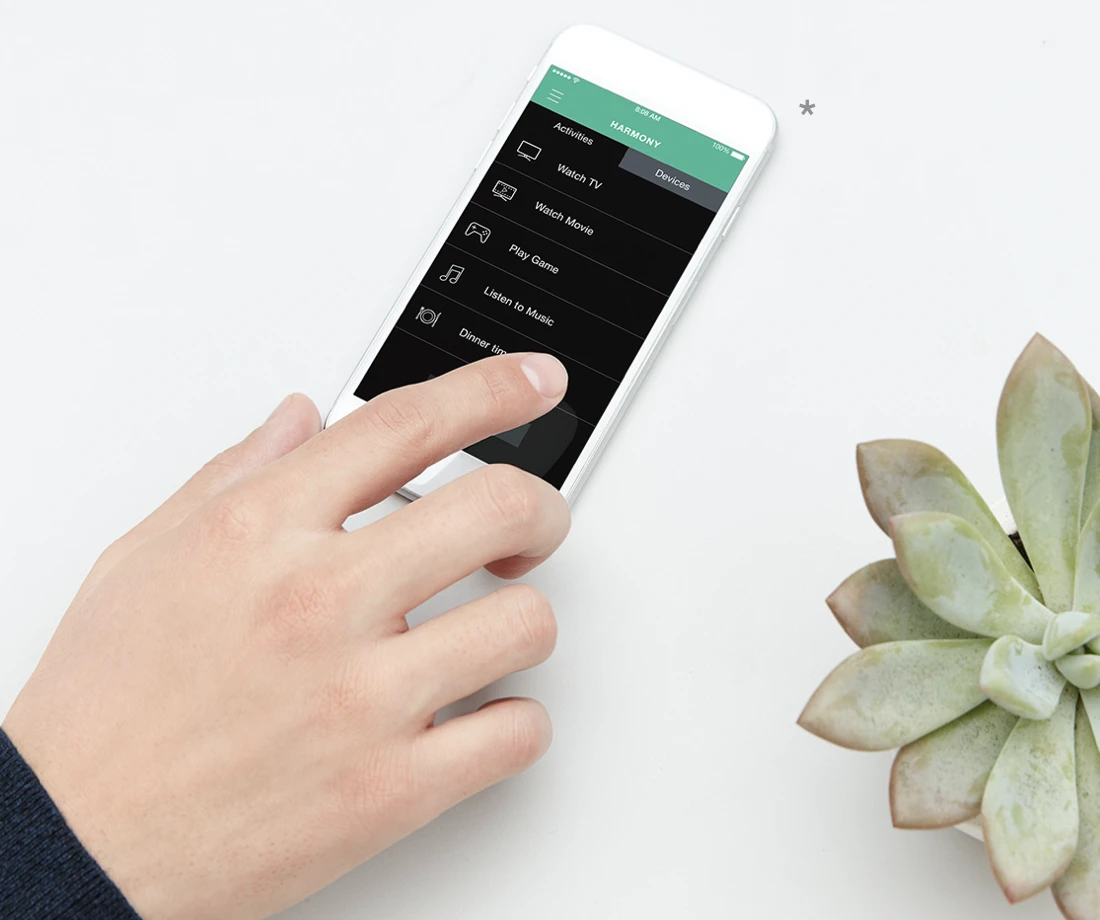
Harmony Elite
Harmony already had a successful line of entertainment products. I led user experience design for a reframing project, working with a researcher.
The experience spanned web, mobile, the remote and third-party integrations. Development involved the firmware team, the web setup team and the native control-app team.
The work took place amid organizational change, with objectives including cost reduction, better NPS, lower customer-support costs and new partnerships.
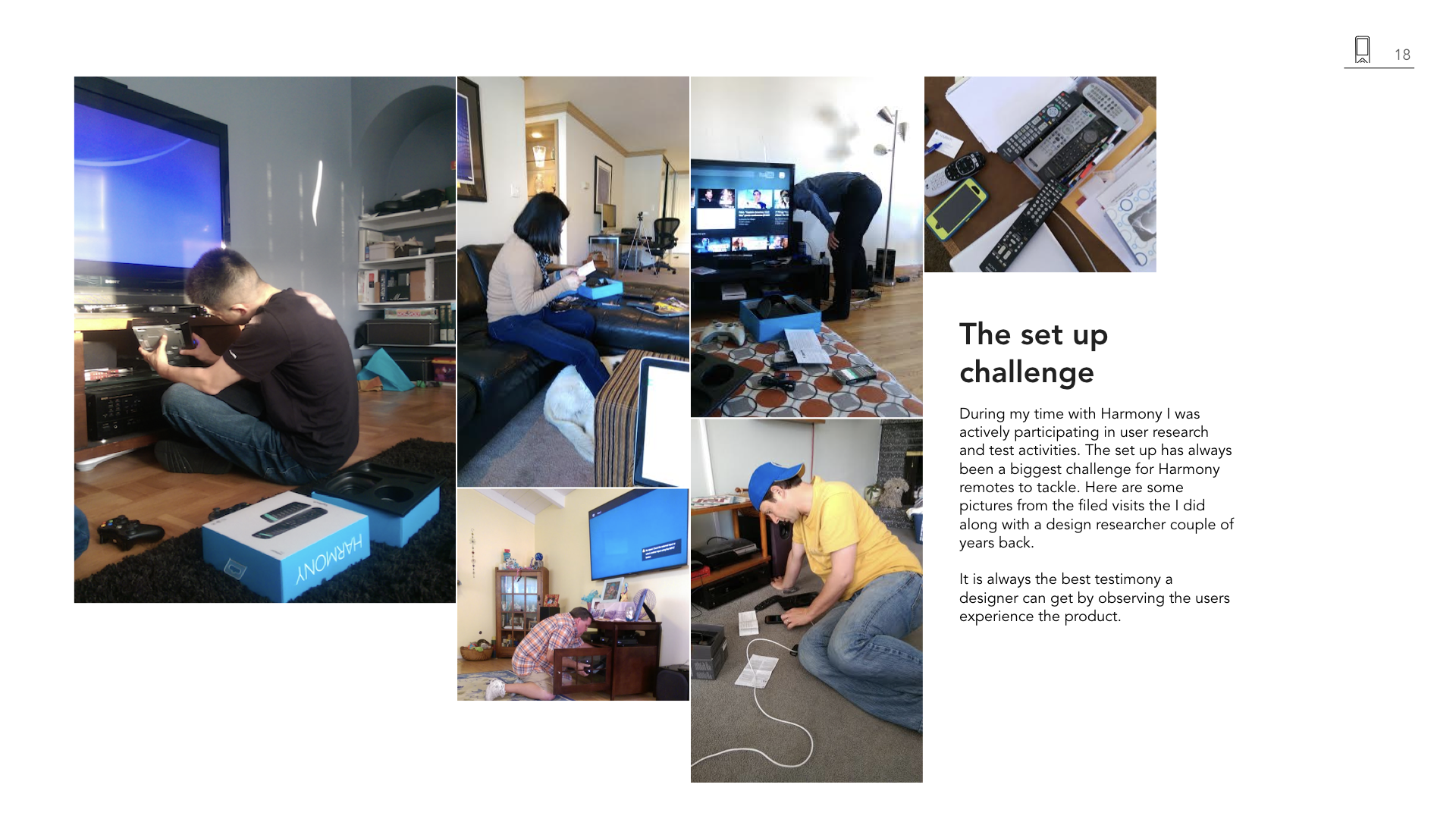
Field visits
Watching The struggle live
Sitting in a user’s living room is the ultimate reality check for a designer. We watched people navigate the Harmony setup process in real-time, completely unguided. Seeing their frustration unfold and having to bite my tongue instead of jumping in to help, gave me actual goosebumps. It transformed an abstract usability metric into a real human roadblock that we had to solve immediately.
Articulating the complexity
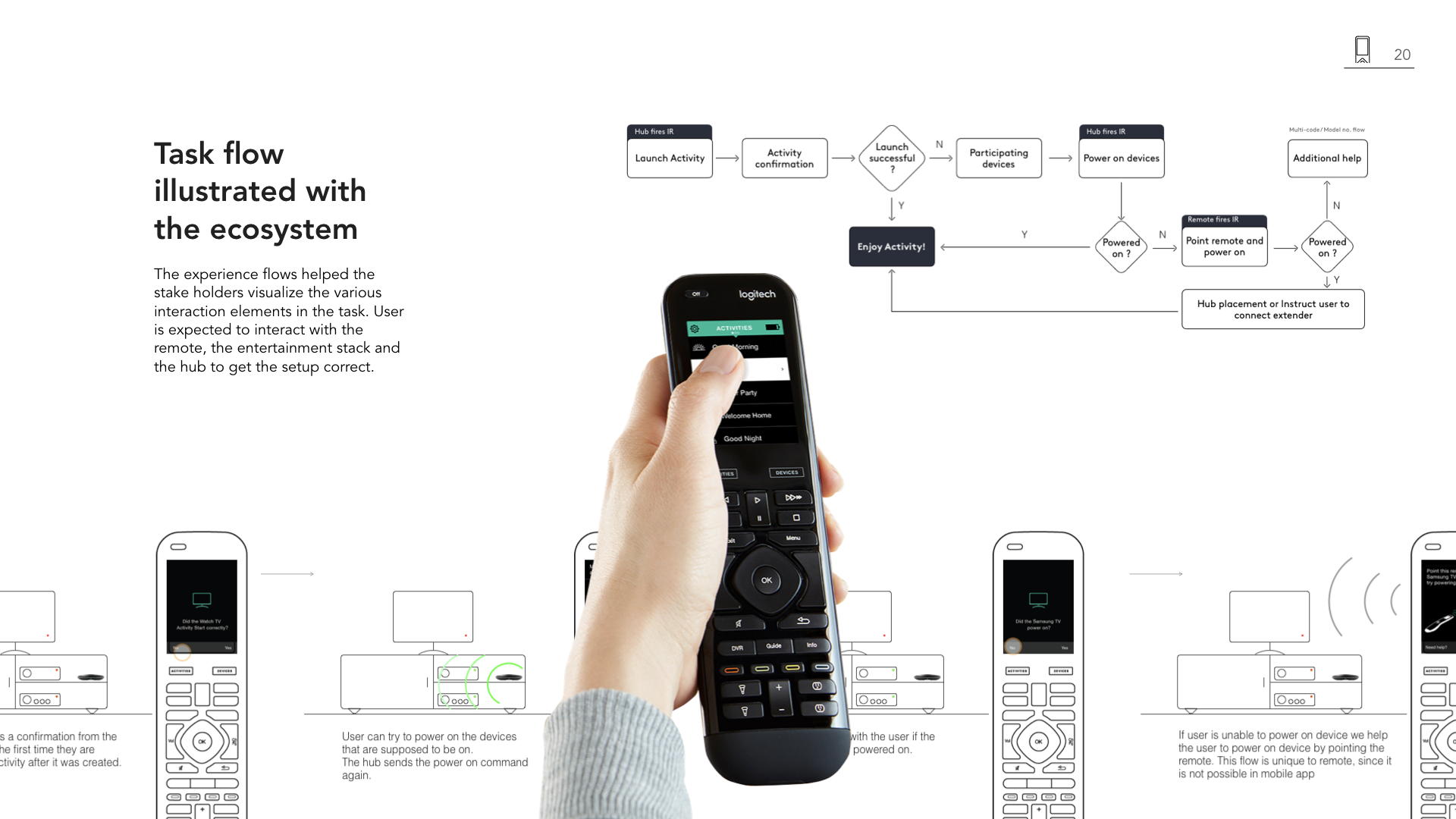
Making the task visible
To capture real-world complexity, I mapped the digital UI flow alongside the physical unboxing, hub placement and hub IR timing, giving the team a clear picture of the actual user environment.
Concept exploration
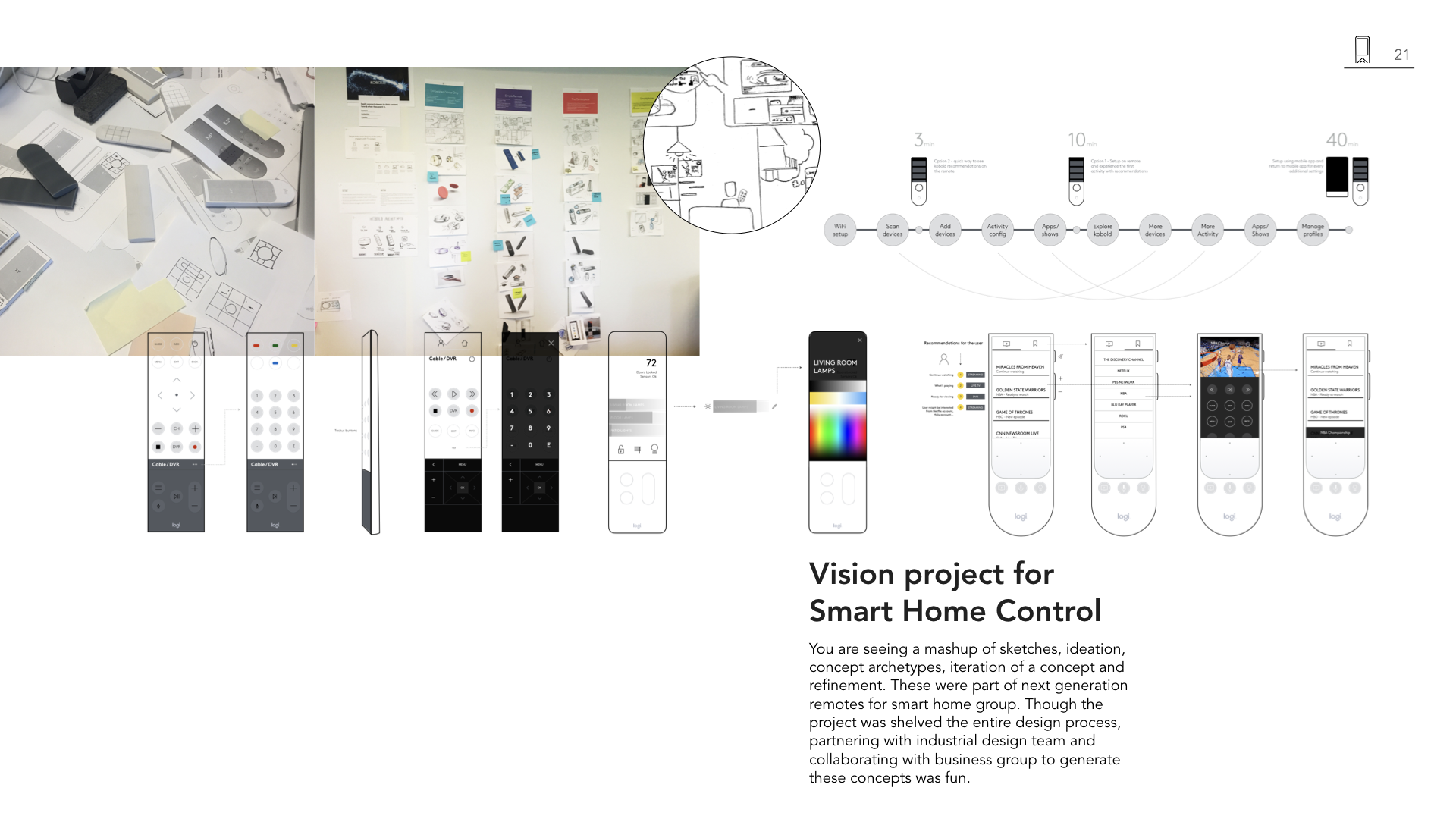
A vision for smart-home control
Sketches, concept archetypes and successive refinements explored a next generation of remotes. I partnered with industrial design and the business group to develop these concepts.
Living-room input
The keyboard opportunity
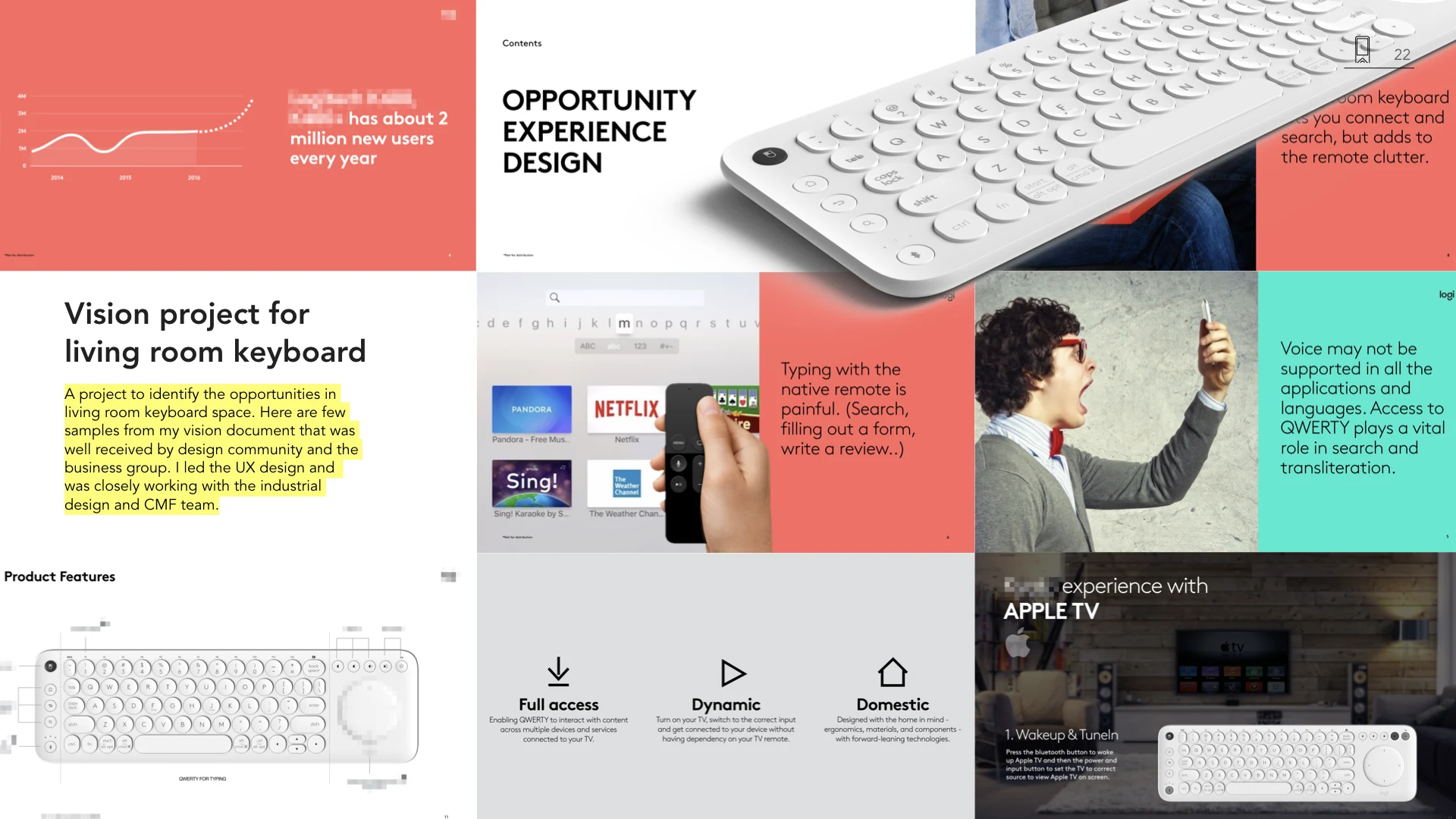
I led UX design for a livingroom keyboard vision, working closely with the industrial design and CMF teams. The work explored search and text entry alongside the existing remote experience.
At the time, the original vision document highlighted the friction of typing with a TV remote, alongside the limitations of voice recognition across different applications and languages.
The ten-foot experience
Harmony on Android TV
Reimagining the Harmony TV control experience was a defining milestone where I owned the entire product lifecycle. Wearing every hat, from defining the product strategy and UX to crafting the art direction and keyframe animations, allowed me to shape every detail. The ultimate reward was taking the final product to CES 2016 and demonstrating it live on the global stage.

More work
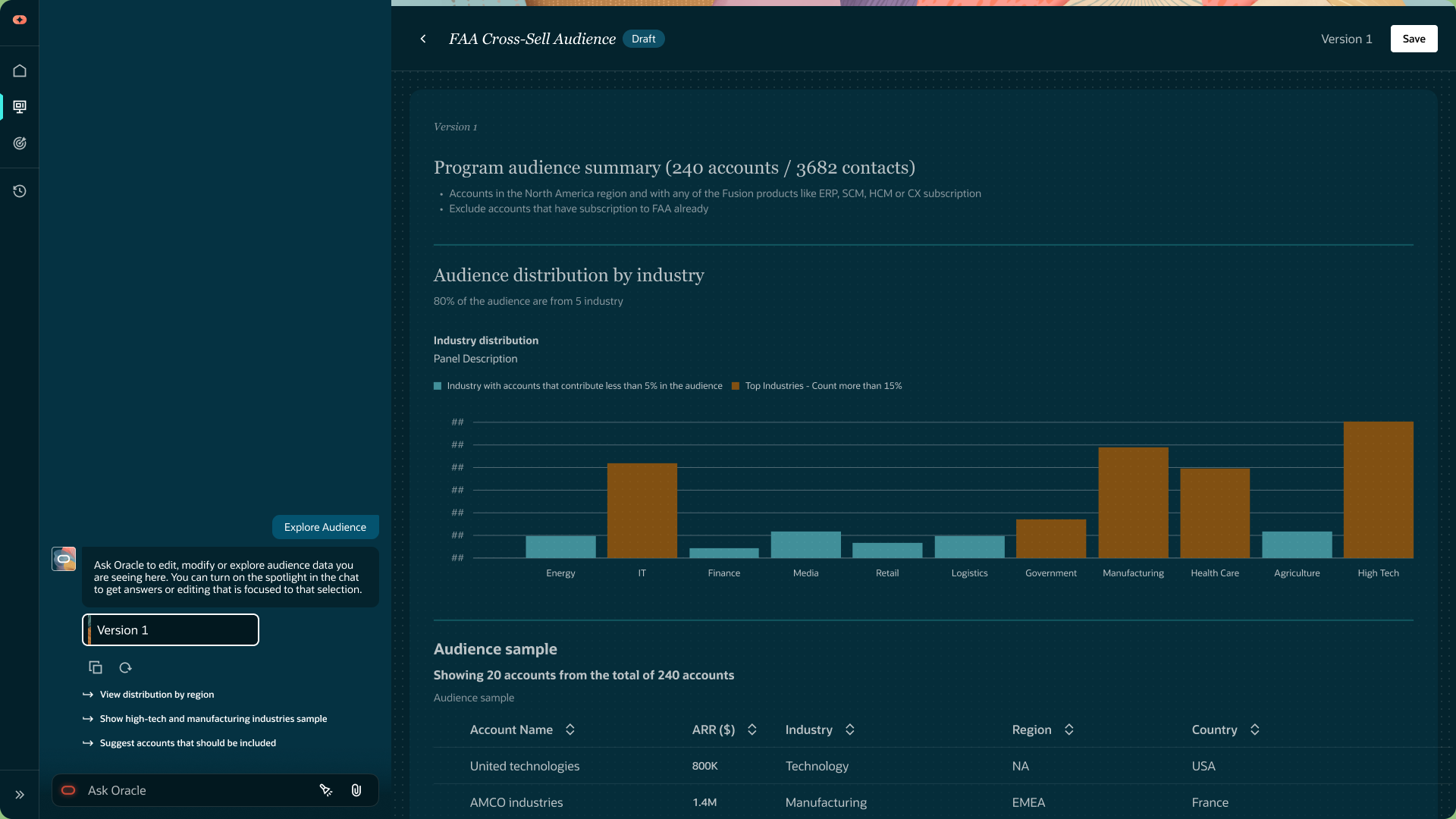
Spotlight
A design jam project to spark ideas supporting Agentic app experiences
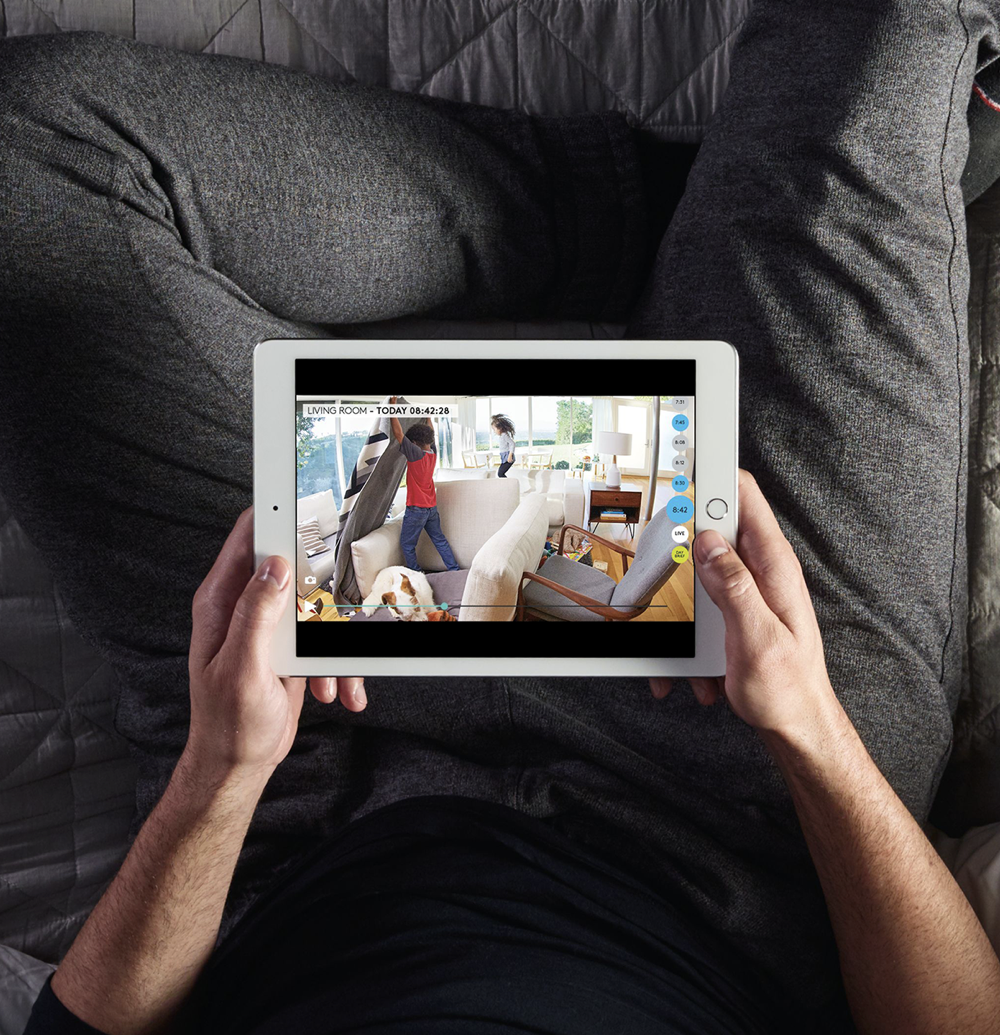
Logi Circle 2.0
Home security, app experience and connected services
Agentic Audiences
Accelerated Redesign: Powered by Vibe Coding
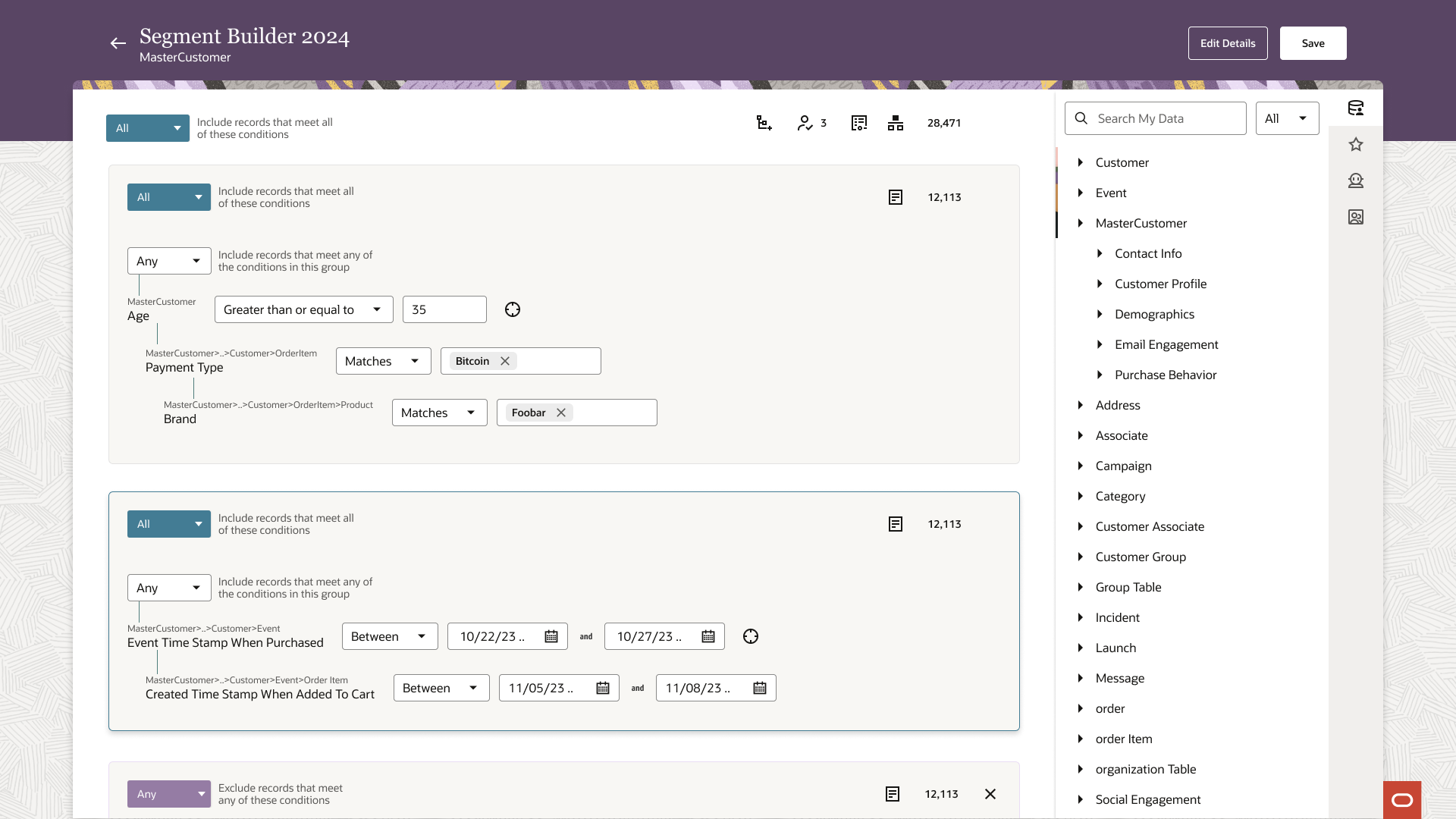
SaaS application to Agentic AI experience
A holistic design journey spanning discovery research, scalable design systems, and advanced AI user experiences.